Resources
Why an hourly rate is not enough to compare two cleaning services
Reading · 6 min

Comparing two professionals only through their hourly rate seems simple. Yet offers can contain very different services, constraints and quality levels. A lower hourly price does not necessarily mean a lower final cost. A higher price does not automatically guarantee a better service either.
Equipment and products
Some services include equipment and products. Others ask the owner to provide vacuum cleaner, mop, cloths, products, bags and specific equipment.
When everything is included, the rate must cover purchase, renewal, transport and maintenance of the equipment.
Travel
In a mountain area, distances are not only measured in kilometres. Travel time can vary with the season, snow, roads, parking, altitude, access to the home and distance between visits.
Some professionals include this cost in their rate. Others charge it separately or apply a minimum booking.
Level of service
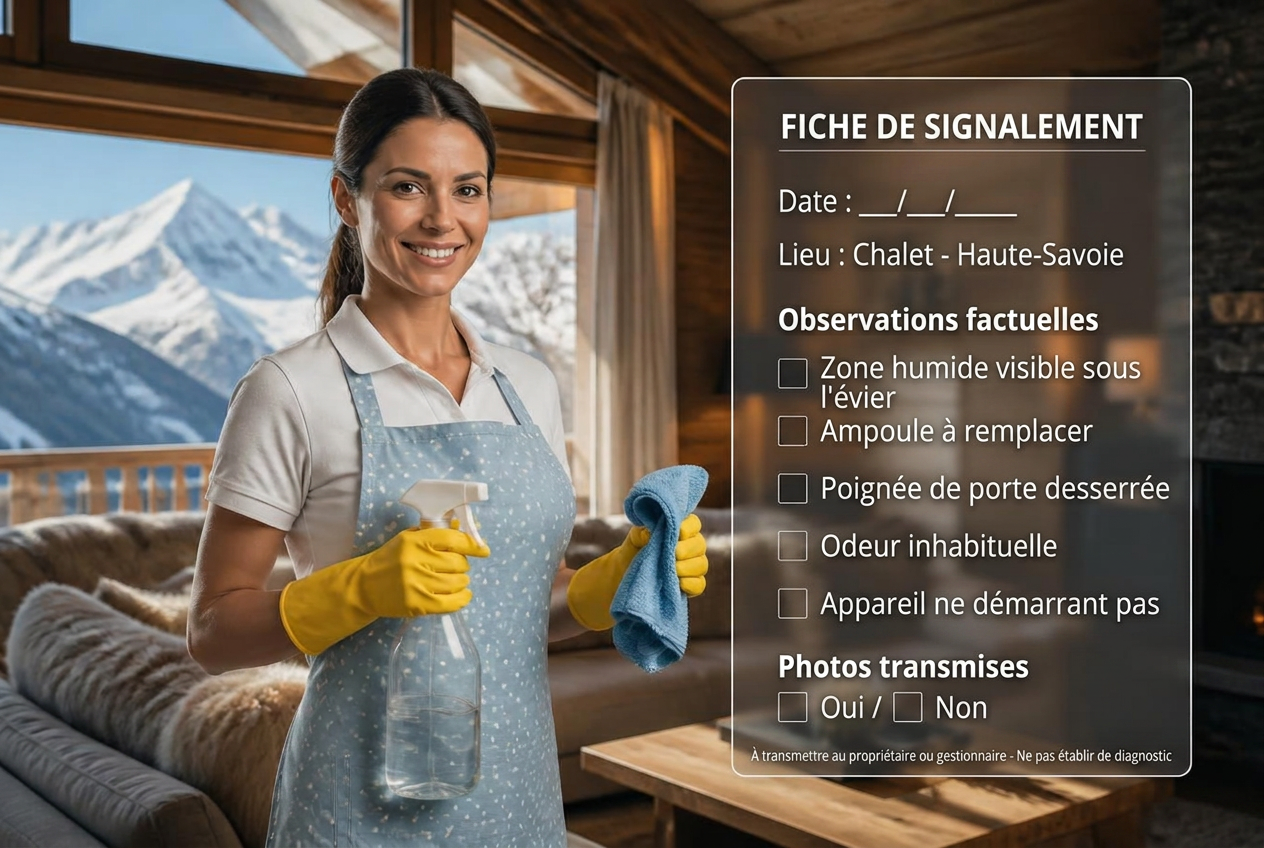
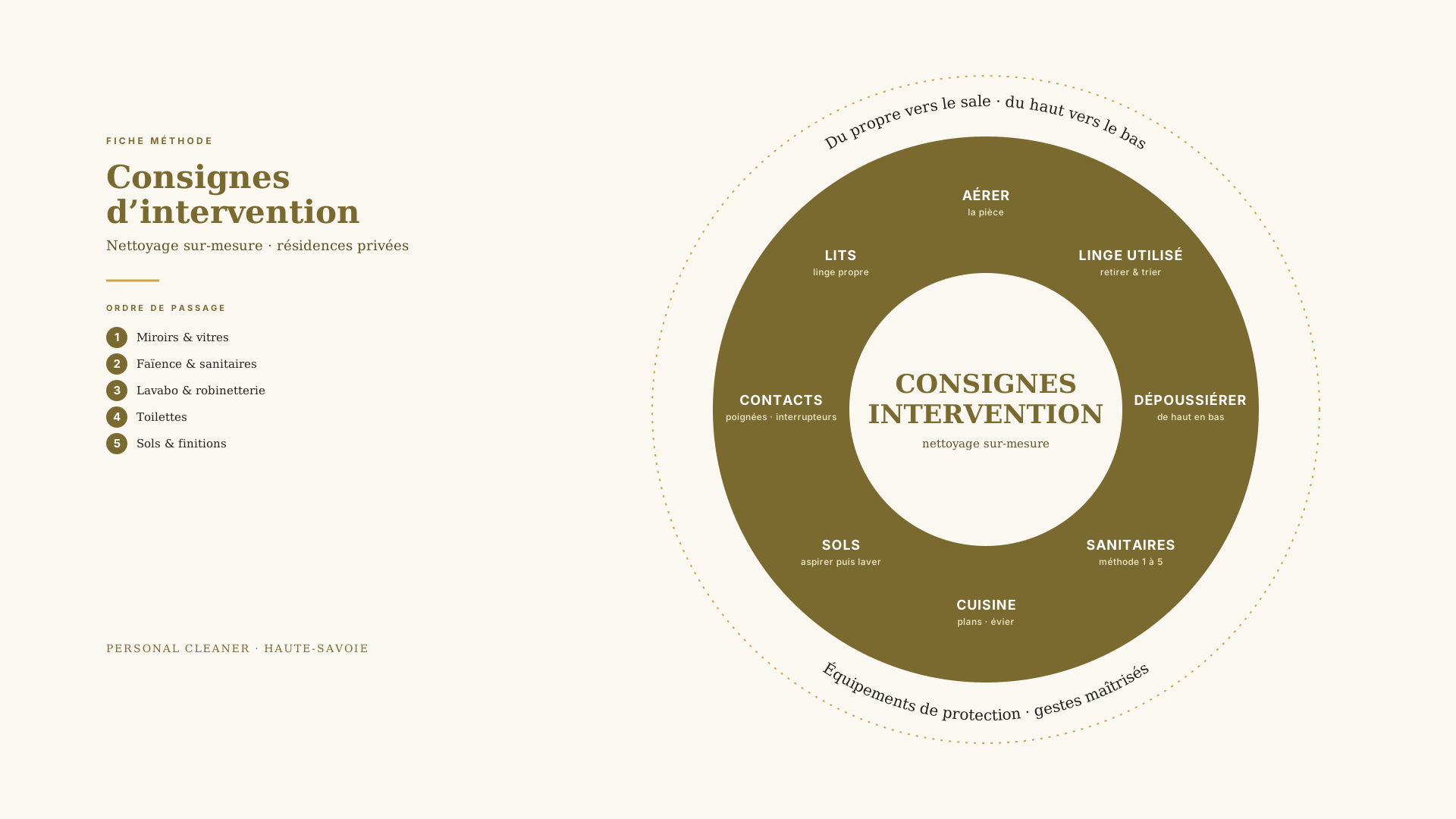
A rate may cover only basic tasks. Another may include equipment, bed preparation, linen organisation, final check, report, anomaly reporting, specific products and a direct relationship with a stable person.
You must therefore compare scope, not the isolated figure.
Minimum duration
A professional may display a low rate but require a four-hour minimum. Another may work two hours at a higher rate.
The total budget per visit can therefore differ from what the hourly price suggests.
Professional status
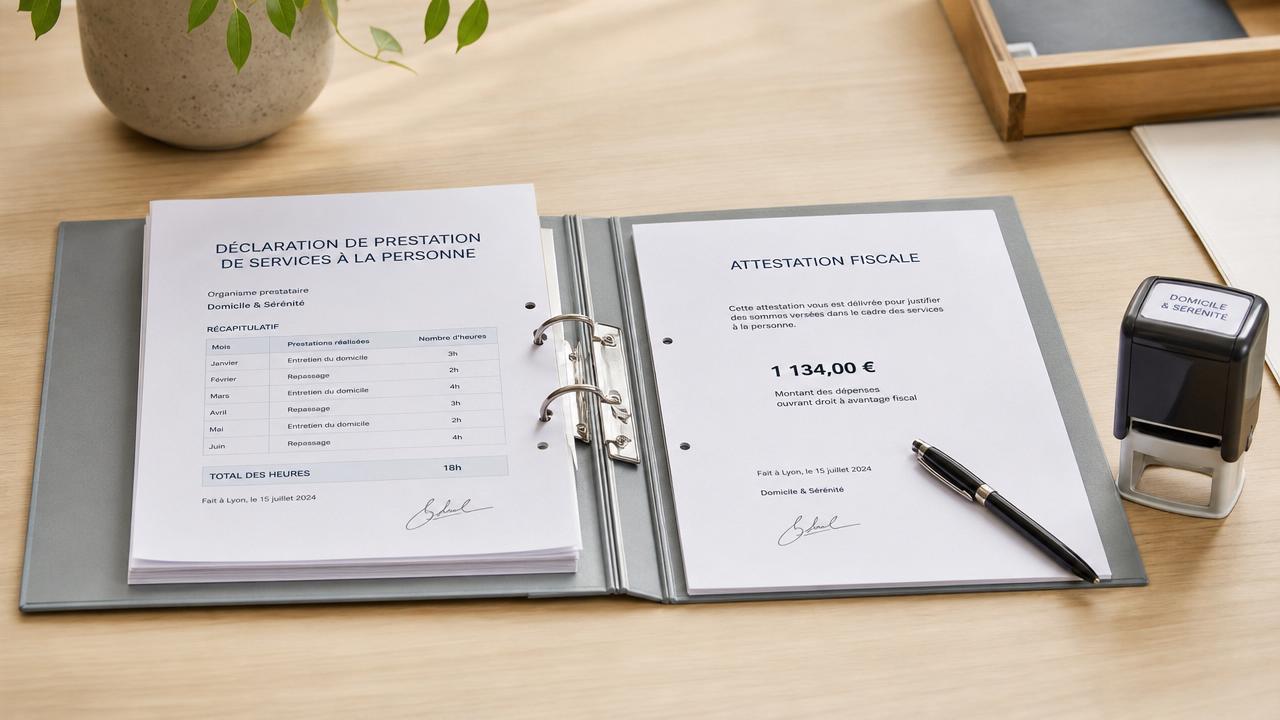
A declared service implies invoicing, insurance, social obligations, administrative management and respect of the professional framework.
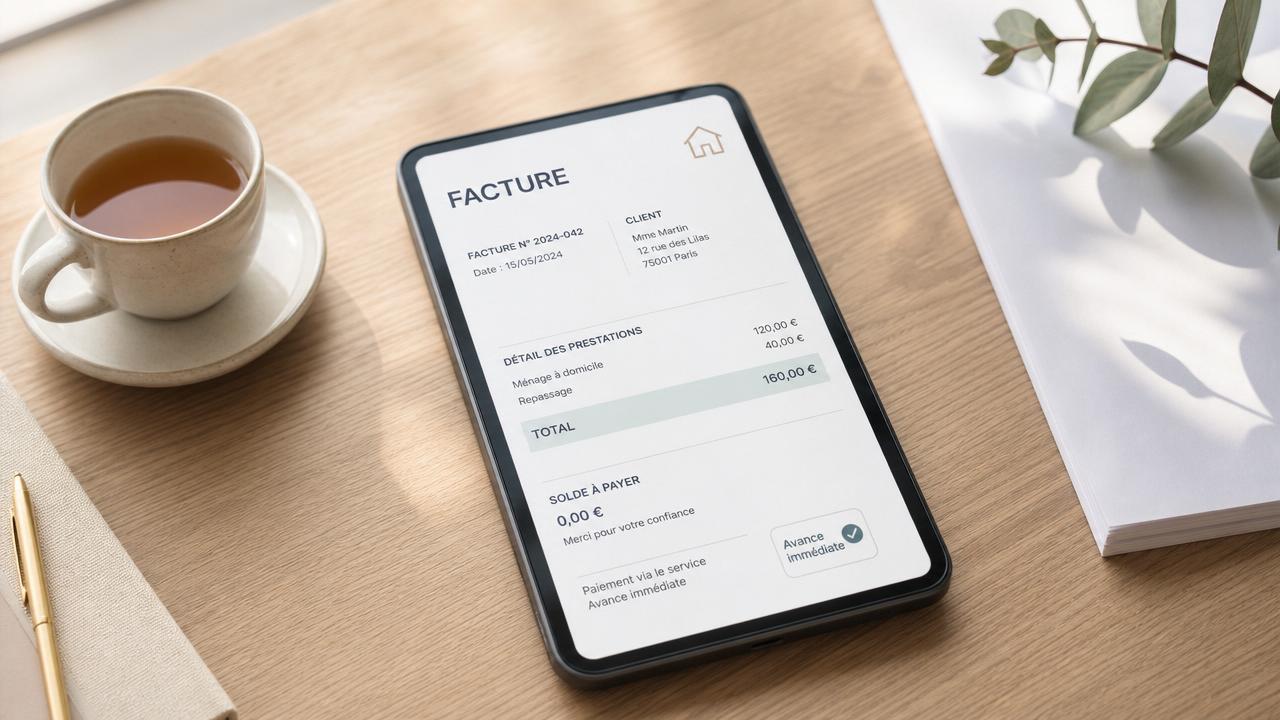
When eligible to French Services à la Personne, the net cost can also differ from the displayed rate. Commercial services linked to short-term rentals do not automatically fall under the same framework.
Quality and stability
A very cheap service can become costly when people constantly change, instructions must be repeated, tasks are forgotten, equipment is unsuitable, a redo is needed or the booked time is insufficient.
Stability and consistency have economic value, even when harder to measure.
Questions to ask
Before comparing, it is useful to ask: What exactly does the rate include? Is equipment provided? Is there a minimum booking? Is travel included? Is linen included? Who actually works? Is a report planned? What tasks are excluded? Is the price eligible for a tax benefit? How are extra requests billed?
Compare the expected outcome
The best comparison combines three elements: total cost per visit, real content of the service and expected level of result.
Hourly rate remains important information. But without scope, duration and conditions, it tells only a small part of the story.
An isolated rate says nothing of a service's real value. Comparing seriously means looking at what is included, how it is delivered and how consistently.
Each home has its specifics. A first exchange helps understand your needs before any intervention.
Get in touchResources