Resources
Working Safely at Height with a Stepladder
Reading · 2 min
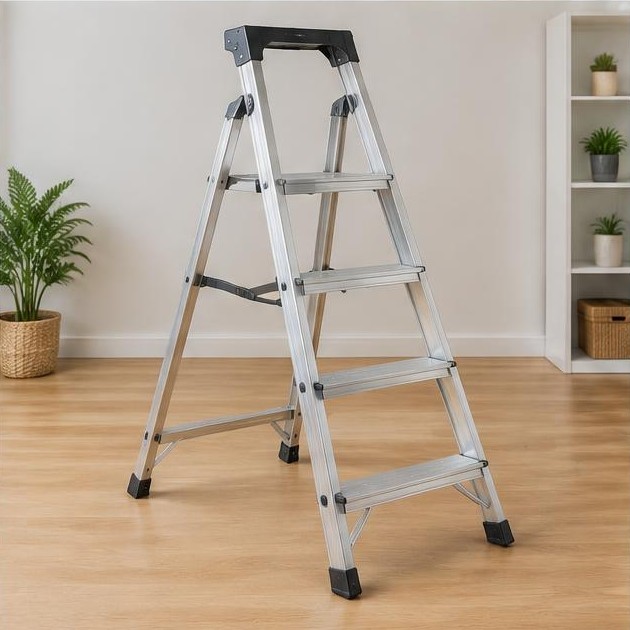
Using a stepladder may seem simple, but it requires strict safety protocols to prevent falls, which remain a leading cause of domestic injuries.
Inspection and Placement
Before climbing, ensure all four feet are on a level, non-slip surface. Verify that the spreader bars are fully locked and that the steps are dry and free of grease or debris that could cause a slip.
Never place a ladder behind an unlocked door or on top of unstable rugs or boxes. The area around the base must be clear of obstacles to ensure a safe descent and prevent tripping hazards.
Climbing and Posture
Use only the steps permitted by the model's instructions; do not stand on its top unless it is designed for that purpose. Face the stepladder and maintain three points of contact while climbing and descending.
Keep your center of gravity (your belt buckle) between the side rails. Overreaching to the side to access a distant corner is a frequent mistake that leads to the ladder tipping over sideways.
Handling Tools and Weight
Do not carry heavy or bulky items while ascending. Use a tool belt or have a helper pass items to you once you are securely positioned. This keeps your hands free for stabilizing yourself while climbing.
Do not lean out to reach a distant area. Climb down, reposition the stepladder and check its stability before climbing again; never move it while standing on it.
When to Stop and Structural Risks
Stop and descend immediately if you feel dizzy or if the ladder begins to sway. Inspect the ladder regularly; never use equipment with loose rivets, bent rails, or missing rubber feet.
Do not undertake electrical work. If the task requires force, heavy lifting or reaching beyond the stepladder's safe range, stop and ask a suitably equipped, competent professional.
Height safety allows no shortcuts. A stable base and correct posture are essential for every household task.
Each home has its specifics. A first exchange helps understand your needs before any intervention.
Get in touchQuestion about this article? WhatsAppResources