Resources
Cleaning and Caring for Induction Cooktops
Reading · 2 min
The glass-ceramic surface of induction hobs combines aesthetics and technology but remains sensitive to scratches and thermal shocks. Effective maintenance relies on patience, the use of appropriate tools, and strict adherence to safety guidelines to avoid damaging the underlying electronic components.
Post-Cooking Safety Precautions
Always wait for the cooking zone to cool down completely before cleaning. Thermal shock caused by applying cold water to a hot surface could crack the glass or damage the electronic components located beneath the hob. Safety must remain your top priority when handling these appliances.
Once the hob is cool, use a soft, slightly damp sponge with a drop of neutral dish soap to remove light splashes. By cleaning promptly after each use, you prevent residues from hardening and becoming more difficult to remove during subsequent cooking sessions.
Removing Carbonized Residue
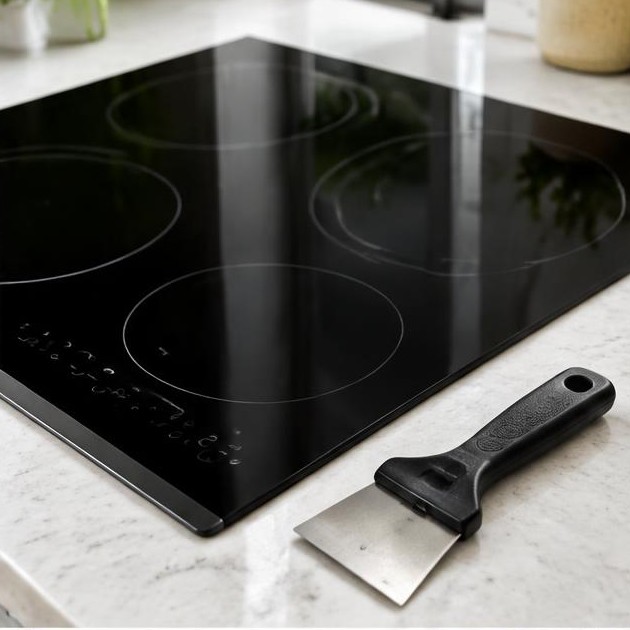
For burnt-on food residues, exclusively use a metal scraper specifically designed for glass-ceramic surfaces. Hold the blade at a 30-degree angle to the glass to gently scrape away deposits without ever poking or scratching the surface. Work with small, controlled movements.
Strictly avoid using metallic abrasive pads, steel wool, or kitchen knives, which cause irreversible scratches. It is recommended to replace the scraper blade as soon as it shows any sign of wear or rust to ensure risk-free cleaning for the coating.
Treating Limescale and Water Marks
Whitish marks left by water evaporation can be treated with a soft cloth soaked in diluted lemon juice. It is imperative to rinse immediately with clear water using a clean cloth to neutralize the acidity and prevent long-term marking of the glass.
Never spray household glass cleaners containing ammonia or bleach on your induction hob. These aggressive chemical agents can alter the protective coating and leave permanent iridescent streaks. Always prioritize products recommended by the appliance manufacturer.
Critical Signs and Electrical Safety
If you notice a crack, even a superficial one, or a chip in the glass, stop all use immediately and disconnect the appliance if possible. Liquid infiltration through a crack poses a major risk of short circuits and electrocution. Never attempt to seal a crack yourself.
Never attempt to disassemble the hob to access internal components or to clean touch sensors in case of malfunction. Only a manufacturer-authorized technician is qualified to work on the electronic circuit. In case of failure, consult the user manual to identify official error codes.
A clean hob maintained according to manufacturer standards ensures precise cooking and extends the lifespan of your equipment.
Each home has its specifics. A first exchange helps understand your needs before any intervention.
Get in touchQuestion about this article? WhatsAppResources